
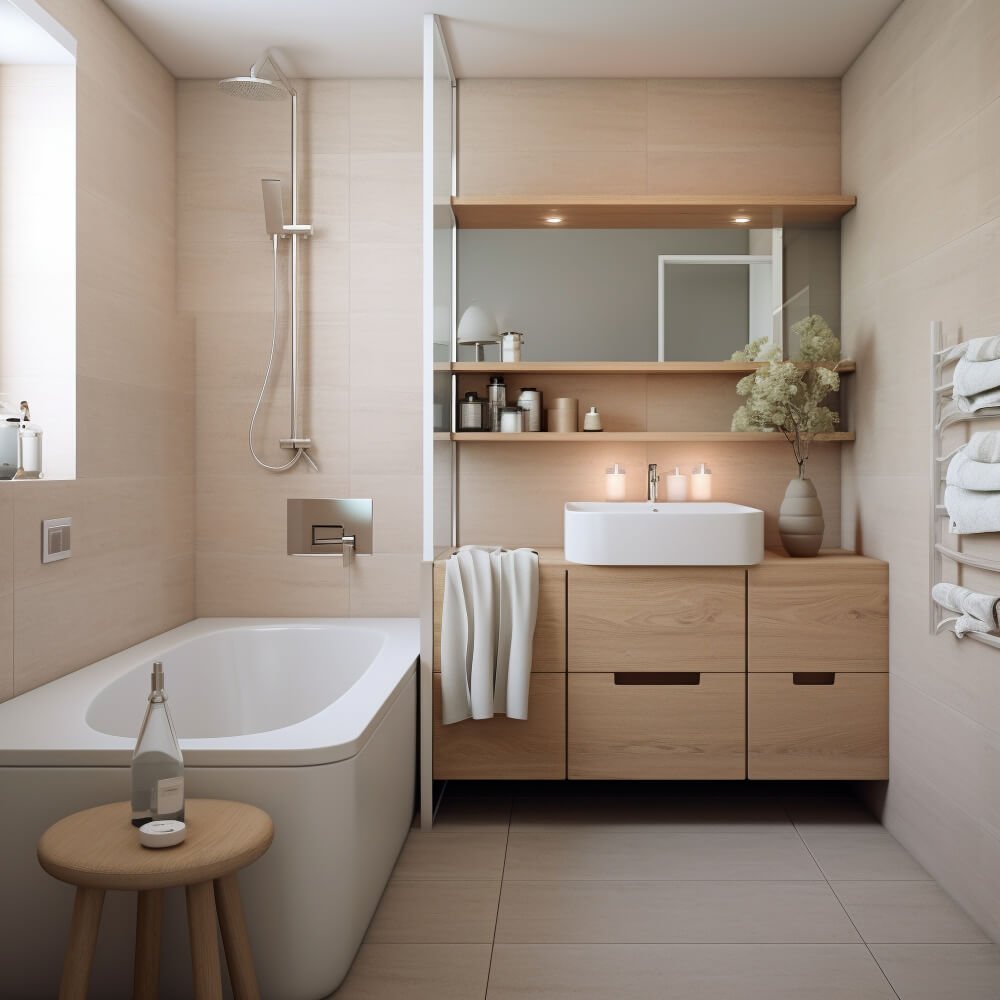

"The quote was $18,000. We ended up spending $26,400." When Jennifer showed me her final bathroom remodeling invoice in Pembroke Pines, I wasn't surprised.
She'd fallen victim to the hidden costs that catch nearly every first-time renovator—expenses that nobody mentions until you're halfway through demolition with no turning back.
⚠️ The Reality of Hidden Costs
Hidden bathroom remodeling costs in South Florida typically add 20-35% to initial project quotes, ranging from $3,000 to $12,000 in unexpected expenses.
The most common culprits include:
- Outdated plumbing in older Hialeah homes ($1,500-$5,000)
- Mold remediation from humidity damage ($2,000-$8,000)
- Permit fees and inspection delays ($600-$1,800)
- Scope creep from mid-project changes ($2,000-$6,000)
After managing bathroom renovations across Miami Gardens, Hollywood, and Coral Springs for years, I can show you exactly what to expect—and how to budget for the surprises that aren't really surprises.
The True Cost of "Hidden" Expenses: They're Predictable
Here's what frustrates me about the term "hidden costs"—most aren't actually hidden. They're predictable challenges that homeowners don't budget for because nobody explains them upfront. Let's fix that.
Category 1: Structural Surprises Behind the Walls
You can't see what's behind your walls until demolition begins. In South Florida homes—especially those built between 1960-1990—problems lurk.
Rotted Floor Joists and Subfloor ($1,200-$4,500)
Years of moisture exposure rot wood framing. You discover this after removing tile or vinyl flooring during demo.
Common in:
- Homes built before 1985 (less robust moisture barriers)
- Bathrooms with shower/tub leak history
- Hialeah and Miami Gardens homes with historic plumbing issues
Cost breakdown:
- Subfloor replacement (40-60 sq ft): $800-$1,800
- Floor joist sister reinforcement: $600-$1,500
- Additional labor for structural carpentry: $400-$1,200
A Coral Springs client discovered extensive subfloor rot around her toilet during demolition. What started as a $15,000 remodel became $18,700 after replacing 35 square feet of rotted subfloor and reinforcing two compromised joists. Unavoidable once discovered—but predictable in a 1978 home that had experienced slow toilet leaks.
Outdated or Damaged Plumbing ($1,500-$5,000)
Older homes often have:
- Galvanized pipes (corroded internally, restrict water flow)
- Cast iron drain pipes (deteriorating, prone to leaks)
- Polybutylene pipes (known to fail, insurance concerns)
- Incorrect pipe sizing for modern fixtures
Typical costs:
- Replacing supply lines (hot and cold): $800-$1,800
- Drain line replacement: $1,200-$3,500
- Complete bathroom re-piping: $2,500-$5,000
Most contractors can't definitively identify these issues until walls are opened. A Miramar home built in 1972 revealed corroded galvanized pipes during bathroom renovation. The homeowner spent $3,200 on complete re-piping—but prevented future leaks and water damage that would have cost far more.
Aluminum Wiring ($2,000-$8,000)
Homes built 1965-1973 often used aluminum wiring, now considered a fire hazard requiring remediation.
Remediation options:
- COPALUM connectors at switches/outlets: $2,000-$4,000
- Complete rewiring of bathroom circuit: $1,500-$3,500
- Whole-house rewiring (if widespread): $8,000-$15,000+
⚠️ This isn't optional—insurance companies and building codes require addressing aluminum wiring when discovered during permitted renovation work.
Mold and Water Damage ($800-$8,000)
South Florida's humidity plus any historical moisture issues create mold growth behind walls, especially around showers and tubs.
Remediation costs:
- Minor surface mold (contained area): $800-$1,500
- Moderate mold (wall cavities, requires treatment): $2,000-$4,000
- Extensive mold (multiple walls, professional remediation): $4,500-$8,000
A Hollywood homeowner discovered black mold covering 40% of the wall cavity behind her shower during renovation. Professional mold remediation cost $3,800 but was absolutely necessary before rebuilding could proceed.
Termite Damage ($800-$3,500)
Termites love moisture. Bathrooms provide ideal conditions. Florida homes are particularly susceptible.
Repair costs:
- Minor framing damage repair: $800-$1,500
- Moderate structural replacement: $1,800-$2,800
- Extensive damage (multiple studs, blocking): $2,500-$3,500
- Plus termite treatment: $500-$1,200 additional
Category 2: Code Compliance Upgrades
When you pull permits for bathroom renovations in Miami-Dade County, you must bring systems up to current code—not just replace what was there.
GFCI Outlets ($150-$450)
Current code requires GFCI (Ground Fault Circuit Interrupter) outlets near water sources. Older bathrooms often lack these.
Requirements:
- GFCI outlet within 3 feet of sink
- GFCI protection for all bathroom outlets
- Separate circuit for bathroom (can't share with other rooms)
Cost: $50-$150 per outlet installed, $150-$450 for typical bathroom
Ventilation Requirements ($400-$1,200)
Florida building code requires mechanical ventilation (exhaust fan) in bathrooms without operable windows. Many older Hialeah homes have undersized or non-existent fans.
Code requirements:
- Minimum 50 CFM for bathrooms under 50 sq ft
- 100+ CFM for larger bathrooms
- Must vent to exterior (not attic)
- Proper ductwork and termination
Costs:
- Basic code-compliant fan installation: $400-$700
- Ductwork modifications: $300-$600
- Exterior vent installation (if none exists): $200-$400
Shower/Tub Safety Features ($200-$600)
Modern codes require:
- Pressure-balancing or thermostatic valves (prevent scalding)
- Tempered glass for shower doors
- Proper blocking for future grab bar installation
These weren't required when older bathrooms were built but must be included in permitted renovation work.
Water Heater Expansion Tank ($200-$400)
If your bathroom renovation requires any water heater work, current code requires thermal expansion tanks on water heaters—many older homes don't have them.
Structural Reinforcement for Heavy Materials ($400-$1,800)
Installing heavy tile, stone, or large-format materials may require:
- Additional floor reinforcement
- Cement board underlayment (where it didn't exist before)
- Proper backing for wall-mounted fixtures
A Sunrise client wanted large-format marble tile (60 lbs per sq ft). Her 1985 bathroom floor needed additional sistering of joists ($1,200) to support the weight safely.
Category 3: Permit and Inspection Costs
Many homeowners assume contractors include all permit costs in quotes. Sometimes they do. Often they don't—or costs increase due to project complexity.
Initial Permit Fees ($400-$1,200)
Miami-Dade County charges based on project scope:
- Cosmetic updates (no plumbing/electrical changes): Often no permit required
- Standard renovation (fixture relocation, electrical updates): $400-$700
- Extensive renovation (layout changes, structural work): $700-$1,200
Re-Inspection Fees ($100-$300 per inspection)
If work fails initial inspection, you pay for additional inspections:
- Typical re-inspection: $100-$150
- Multiple re-inspections (poor contractor quality): $300-$600
💡 This is why hiring licensed, experienced contractors matters. Reputable contractors rarely fail inspections.
Permit Delays ($500-$2,000)
Permit approval delays cost money:
- Contractor standby time: $200-$500 per week
- Material storage fees: $100-$300
- Extended tool rental: $150-$400
- Schedule conflicts requiring re-mobilization: $300-$800
While not direct costs, permit delays extend timelines and create indirect expenses.
Engineering Requirements ($800-$2,500)
Structural modifications sometimes require engineer stamped drawings:
- Removing walls (even non-load-bearing): $800-$1,500
- Floor reinforcement for heavy materials: $500-$1,200
- Plumbing rough-in for complex layouts: $600-$1,500
These aren't always predictable upfront but become apparent during the permit application process.
Category 4: The "While We're At It" Syndrome
This is the most expensive hidden cost—and it's entirely self-inflicted.
⚠️ Scope Creep Examples and Real Costs
"Can we move that toilet 3 feet over?"
Additional cost: $1,800-$3,500
Reason: Requires breaking concrete, new plumbing runs, additional labor
"Let's extend the tile to the ceiling instead of just 6 feet"
Additional cost: $1,200-$2,800
Reason: Doubles tile square footage, adds labor time
"Actually, I want the frameless shower door, not the semi-frameless"
Additional cost: $600-$1,400
Reason: Material upgrade, different installation requirements
"Can we add heated floors while we're at it?"
Additional cost: $1,500-$3,500
Reason: Additional materials, electrical work, installation complexity
"I changed my mind on the tile—let's use the more expensive one"
Additional cost: $800-$2,500
Reason: Material cost difference, potential restocking fees on returned tile
A Pembroke Pines client made seven "while we're at it" changes during her bathroom renovation. Each seemed small (average $800 per change), but they accumulated to $5,600 in additional costs—30% more than her original $18,000 quote.
Preventing scope creep:
- Finalize all design decisions before demolition begins
- Create a written change order process with your contractor
- Calculate the cost impact before agreeing to any changes
- Remind yourself: "No" is a complete sentence
- Keep a running total of changes separate from base contract
Category 5: Temporary Living Adjustments
Bathroom renovations create inconvenience—which costs money in ways people don't anticipate.
Using Alternative Facilities ($200-$800)
If renovating your only bathroom:
- Gym membership for showers: $60-$120/month (1-2 months typical)
- Using family/friend facilities: Gas and travel costs
- Planet Fitness or similar budget gym: $20-$40/month
Increased Dining Out ($300-$1,000)
Without easy water access, many homeowners eat out more frequently during renovations rather than cooking and cleaning with limited facilities.
Portable Toilet Rental ($150-$400)
For homes with single bathroom under renovation:
- Portable toilet rental: $150-$300/month
- Delivery and pickup: $50-$100
Pet Boarding or Daycare ($200-$600)
Renovation noise, open doors, and worker traffic stress pets and create escape risks. Some homeowners board pets during intensive renovation weeks.
Lost Work Productivity ($0-$1,500)
Remote workers often need to work elsewhere due to:
- Demolition noise (70-90 decibels)
- Dust and odors
- Contractor questions and interruptions
- Water shutoffs
Co-working space day passes ($25-$40/day) add up over 3-4 week projects.
Category 6: Material Waste and Overage
Material calculations include waste factors, but actual waste often exceeds estimates.
Tile Overage ($200-$800)
Standard waste factor is 10-15%, but actual waste can reach 20-25% with:
- Complex patterns
- Inexperienced installers
- Breakage during installation
- Cuts around fixtures and angles
Extra tile costs:
- Budgeted waste (100 sq ft × 15%): 15 sq ft extra
- Actual waste (100 sq ft × 23%): 23 sq ft extra
- Unexpected cost (8 sq ft × $12): $96
Multiply across floor, wall, and shower tile, and waste overages can add $200-$800.
Paint and Materials ($100-$300)
- Additional primer for problem areas
- Extra caulk and sealants
- Unexpected repair materials
- Additional sandpaper, spackle, etc.
Fixture Returns and Restocking Fees ($50-$200)
Change your mind after purchasing fixtures? Restocking fees (15-25% typical) plus return shipping add unexpected costs.
Category 7: South Florida Specific Challenges
Living in South Florida creates unique costs that other regions don't face.
Hurricane Preparation Mid-Project ($200-$500)
If a hurricane threatens during your renovation:
- Contractor charges for securing site: $200-$400
- Material protection and covering: $100-$200
- Timeline delays upon restart: Indirect costs
A Miami Beach client's bathroom renovation was mid-construction when a hurricane warning issued. The contractor charged $350 to secure the site, cover openings, and protect materials. The storm passed without impact, but the 5-day delay and re-mobilization added $600 in indirect costs.
Additional Waterproofing Requirements ($300-$800)
South Florida's extreme humidity requires enhanced waterproofing beyond minimum standards:
- Waterproof membrane systems (RedGard, Schluter): $300-$600
- Enhanced moisture barriers: $200-$400
- Mold-resistant drywall (Greenboard or cement board): $200-$400
Contractors familiar with South Florida factor these in, but out-of-region contractors sometimes underestimate moisture protection needs—leading to change orders.
Specialized HVAC Considerations ($500-$2,500)
Bathroom renovations can affect home cooling efficiency:
- Sealing around ductwork in renovation zone: $200-$500
- AC load recalculation (if adding substantial heated floors): $300-$600
- Supplementary dehumidification in large master bathrooms: $800-$2,500
Most bathrooms don't require HVAC modifications, but larger luxury renovations occasionally need adjustments.
Hard Water Treatment ($400-$1,200)
Hialeah's hard water causes mineral buildup on fixtures. Some homeowners add:
- Whole-house water softener: $800-$2,500 (affects entire home)
- Bathroom-specific filtration: $400-$900
- Specialty fixture coatings: $200-$500
Not required but often added mid-project when homeowners learn about hard water impacts on their new fixtures.
How to Budget for Hidden Costs
The smartest approach? Acknowledge these costs exist and budget accordingly.
The 15-20% Contingency Rule
Always budget 15-20% above your base quote for contingencies.
Example:
- Base contractor quote: $25,000
- Contingency fund (18%): $4,500
- Total budget: $29,500
This contingency covers:
- Structural surprises: $1,500-$3,000
- Code compliance upgrades: $500-$1,200
- Permit and inspection extras: $300-$800
- Minor scope changes: $500-$1,500
- Material overages: $200-$500
If you don't use the full contingency, celebrate! You've saved money. But having it available prevents panic when issues arise.
Higher Contingency for Older Homes
Hialeah homes built before 1985 should budget 20-25% contingency due to higher likelihood of:
- Outdated plumbing requiring replacement
- Aluminum wiring issues
- Insufficient ventilation
- Code compliance gaps
- Termite or moisture damage
Example for 1975 home:
- Base quote: $22,000
- Contingency (25%): $5,500
- Total budget: $27,500
This might seem excessive, but older homes routinely uncover multiple issues during renovation. Better to budget conservatively and be pleasantly surprised than underbudget and face financial stress mid-project.
Front-Load Investigations
Spend money upfront to reduce surprises:
Pre-Renovation Plumbing Inspection ($200-$400)
Licensed plumber evaluates:
- • Supply line condition
- • Drain pipe integrity
- • Water pressure issues
- • Shut-off valve functionality
Mold Testing ($300-$600)
If you suspect moisture issues:
- • Professional mold inspection: $300-$500
- • Air quality testing: $400-$600
Structural Evaluation ($300-$800)
If planning significant changes:
- • Engineer evaluation of floor structure: $300-$600
- • Load-bearing wall assessment: $400-$800
Electrical Inspection ($150-$300)
For homes built 1965-1980:
- • Verify wiring type (aluminum vs. copper)
- • Check panel capacity
- • Assess grounding and safety
A Plantation homeowner spent $300 on pre-renovation plumbing inspection that revealed corroded pipes. She budgeted $3,200 for re-piping before starting rather than discovering it mid-project—allowing her to explore financing options without deadline pressure.
These upfront costs ($500-$2,000 total) seem expensive but can save $3,000-$8,000 in mid-project surprises and financing stress.
Protecting Yourself: Contract Language That Helps
Your contractor contract should address potential hidden costs explicitly.
Essential Contract Clauses
1. Allowances and Exclusions Section
Contract should clearly state:
- • What's included in base price
- • What's specifically excluded
- • Allowance amounts for uncertain items
Example language: "Base contract includes demolition, tile installation, fixture installation, and finish work as specified. Structural repairs, mold remediation, plumbing/electrical upgrades beyond basic connections, and permit fees are excluded from base price and will be billed as change orders at documented cost plus 20% contractor markup."
2. Change Order Process
Contract should specify:
- • Written approval required for all changes
- • Pricing methodology (fixed price, time and materials, cost-plus)
- • Maximum markup percentages
- • Payment terms for change orders
3. Contingency Line Item
Some contractors include contingency line items:
- • "Contingency allowance: $3,000 for unforeseen conditions"
- • If unused, credit back to homeowner
- • If exceeded, additional costs discussed before proceeding
This creates transparency and shared understanding of potential extras.
4. Discovery Notification Process
Contract should require:
- • Immediate notification when issues discovered
- • Written documentation (photos, descriptions)
- • Cost estimate for remediation
- • Homeowner approval before proceeding
Example language: "Upon discovery of conditions requiring additional work (structural damage, code violations, concealed issues), Contractor will notify Homeowner within 24 hours, provide photographic documentation, and submit written cost estimate. No additional work shall proceed without written homeowner authorization."
Red Flag Contract Language
Avoid contracts with:
- ❌ Vague scope descriptions ("bathroom renovation")
- ❌ No exclusions listed (suggests contractor hasn't thought through potential issues)
- ❌ "As discussed" pricing without itemization
- ❌ No change order process defined
- ❌ Open-ended pricing ("subject to final costs")
A Boca Raton client signed a contract listing only total price ($28,000) with no itemization or exclusions. The contractor later added $8,400 in "necessary" charges that weren't documented in the contract. Legal resolution took months. Detailed contracts prevent these disputes.
Real-World Examples: Hidden Costs in Action
Let's see how hidden costs actually play out in South Florida bathroom renovations.
Example 1: 1978 Hialeah Guest Bathroom
Initial quote
$14,500
Final cost
$18,900
Increase
$4,400 (30%)
Hidden costs breakdown:
- • Subfloor rot repair: $1,800
- • Updated plumbing (corroded galvanized pipes): $1,400
- • Additional GFCI outlets (code requirement): $250
- • Permit fees (not included in quote): $550
- • Tile overage (complex pattern, extra waste): $400
Homeowner response: She had budgeted $16,000 total (10% contingency). The $18,900 final cost exceeded her budget by $2,900, requiring her to use a credit card for the overage. Better contingency planning (20% = $17,400) would have left her just $1,500 over budget—manageable without credit card debt.
Example 2: 2005 Pembroke Pines Master Bathroom
Initial quote
$32,000
Final cost
$36,800
Increase
$4,800 (15%)
Hidden costs breakdown:
- • Mold remediation behind shower: $2,200
- • Upgraded ventilation (code requirement for new layout): $900
- • Scope change: extended tile to ceiling: $1,700
Homeowner response: He budgeted $37,000 total (15.6% contingency). Final cost of $36,800 left him $200 under budget. His contingency planning worked perfectly, covering both unavoidable surprises (mold) and a design upgrade he chose mid-project.
Example 3: 1969 Miami Gardens Full Bath
Initial quote
$19,000
Final cost
$28,600
Increase
$9,600 (50%)
Hidden costs breakdown:
- • Aluminum wiring remediation: $3,200
- • Complete plumbing replacement: $3,400
- • Termite damage repair: $1,800
- • Additional structural reinforcement: $1,200
Homeowner response: She budgeted only $20,000 total (5% contingency). The $28,600 final cost devastated her financially, requiring a high-interest personal loan for the $8,600 overage. A pre-renovation inspection ($800) would have identified these issues, allowing proper budgeting and financing before starting.
Lesson: Older homes (especially pre-1975) need substantial contingency budgets or pre-renovation inspections to avoid financial crisis mid-project.
When "Hidden Costs" Are Actually Scams
Legitimate hidden costs come from unforeseen conditions. Contractor scams are different.
Legitimate vs. Scam: How to Tell the Difference
Legitimate Hidden Cost
- ✅ Discovered during demolition (not visible before walls opened)
- ✅ Documented with photos and detailed description
- ✅ Presented with multiple solution options and cost estimates
- ✅ Contractor explains why it's necessary (code, safety, structural)
- ✅ Pricing aligns with market rates for that work
Scam Indicators
- 🚩 "Discovered" issues before demolition begins
- 🚩 No photo documentation of problems
- 🚩 Pressure to approve immediately without time to verify
- 🚩 Costs far exceed market rates
- 🚩 Contractor refuses to explain or justify charges
- 🚩 Pattern of constant "discoveries" every few days
✅ Example of legitimate hidden cost:
Contractor opens walls, finds extensive mold, provides photos, explains that code requires professional remediation before proceeding, gets multiple quotes from mold remediation companies, presents options to homeowner with clear pricing.
🚩 Example of scam:
Contractor claims they "noticed something concerning" before even starting demo, insists it "definitely needs repair," provides vague description, quotes $4,500 for work that typically costs $1,200, pressures homeowner to approve immediately because "we can't proceed without fixing this."
Protect yourself:
- Require photo documentation of all discovered issues
- Get second opinions for major unexpected expenses (over $2,000)
- Verify that "required" work is actually required (call building department if needed)
- Never approve large change orders under pressure
- Research typical costs for the described work
Frequently Asked Questions: Hidden Bathroom Remodeling Costs
What percentage should I add to my contractor's quote for hidden costs?
Budget 15-20% above the quote for homes built after 1985, and 20-25% for homes built before 1985. This covers typical hidden costs without excessive over-budgeting.
Are hidden costs tax-deductible?
No, bathroom remodeling costs (including hidden costs) are not tax-deductible for primary residences. They may add to your home's cost basis for capital gains calculations when you sell, but there's no immediate deduction. Consult a tax professional for your specific situation.
Should I wait to save more money before starting my bathroom renovation?
If you can't comfortably budget 15-20% above the base quote, consider waiting 3-6 months to save additional contingency funds. Starting a renovation without adequate contingency budget creates significant financial stress when inevitable surprises arise.
Can I negotiate with the contractor about hidden costs?
Legitimate hidden costs (structural damage, code requirements, etc.) aren't really negotiable—the work is necessary. However, you can:
- • Get second opinions on pricing for major additional work
- • Negotiate contractor markup percentages on change orders
- • Explore value-engineering solutions (different materials or methods)
- • Discuss payment terms if costs exceed your immediate budget
What if I discover hidden costs exceed my budget mid-project?
Options include:
- • Pause the project to secure additional financing
- • Make value-engineering substitutions (less expensive materials)
- • Eliminate non-essential features to offset necessary repairs
- • Negotiate payment plans with your contractor
- • Use credit cards or personal loans for overage (last resort)
Never: Continue work you can't afford or disappear without paying. Both create legal and financial consequences worse than pausing to arrange proper financing.
Are contractors required to disclose potential hidden costs upfront?
No specific legal requirement in Florida, but reputable contractors discuss potential risks based on home age and condition. During estimates, experienced contractors should mention: "In homes this age, we commonly discover [plumbing issues, mold, etc.]. I recommend budgeting an additional [percentage] for contingencies."
How can I tell if my contractor is honest about discovered issues?
Honest contractors:
- ✅ Show you the problems directly (invite you to see the mold, damaged pipes, etc.)
- ✅ Provide photo documentation
- ✅ Explain why the work is necessary
- ✅ Offer multiple solution options with different price points
- ✅ Give you time to verify and get second opinions
- ✅ Don't pressure immediate decisions
If your contractor exhibits these behaviors, they're likely being honest about discovered issues.
Taking Control: Your Hidden Cost Action Plan
Hidden costs aren't truly hidden—they're predictable challenges that smart budgeting addresses upfront.
Your Action Plan
- 1 Budget 15-25% contingency based on home age and condition
- 2 Consider pre-renovation inspections ($500-$2,000) for older homes to identify issues before starting
- 3 Include clear contract language addressing discovery processes and change orders
- 4 Research typical costs for common hidden expenses so you can evaluate contractor estimates
- 5 Maintain financial reserves beyond the contingency budget if possible
- 6 Stay involved during demolition to see discovered issues firsthand
- 7 Document everything with photos and written change orders
- 8 Get second opinions on major unexpected expenses over $2,000
Jennifer, the Pembroke Pines homeowner from the opening story, told me afterward: "I wish I'd known about the 20% rule. I would have waited two more months to save an additional $3,500. The financial stress of unexpected costs ruined what should have been an exciting renovation."
Don't be Jennifer. Budget realistically, expect the unexpected, and transform your bathroom without financial panic.
For more guidance on bathroom remodeling in Hialeah and South Florida, explore our resources on:
Get an Honest, Transparent Quote
Work with contractors who explain potential hidden costs upfront and provide detailed, itemized quotes for your Hialeah bathroom renovation.
Request Your Detailed Quote